ServicesFilter replacement and maintenance
Filter Replacement and Maintenance in Highland Park
A filter only works until its media is spent. We replace sediment cartridges, carbon blocks, RO membranes and tank media on a schedule set by your water use, and the same technician comes back each time, so your system's history stays with someone who knows it.
What upkeep does for a filtration system
Every filter in your home wears out in its own way. A polypropylene sediment cartridge fills with particles until water pressure drops. A carbon block keeps flowing long after its adsorption sites are used up, so taste and odor slowly return without any obvious warning. An RO membrane fouls gradually, and the water still comes out of the faucet even when it is passing more dissolved solids than it should.
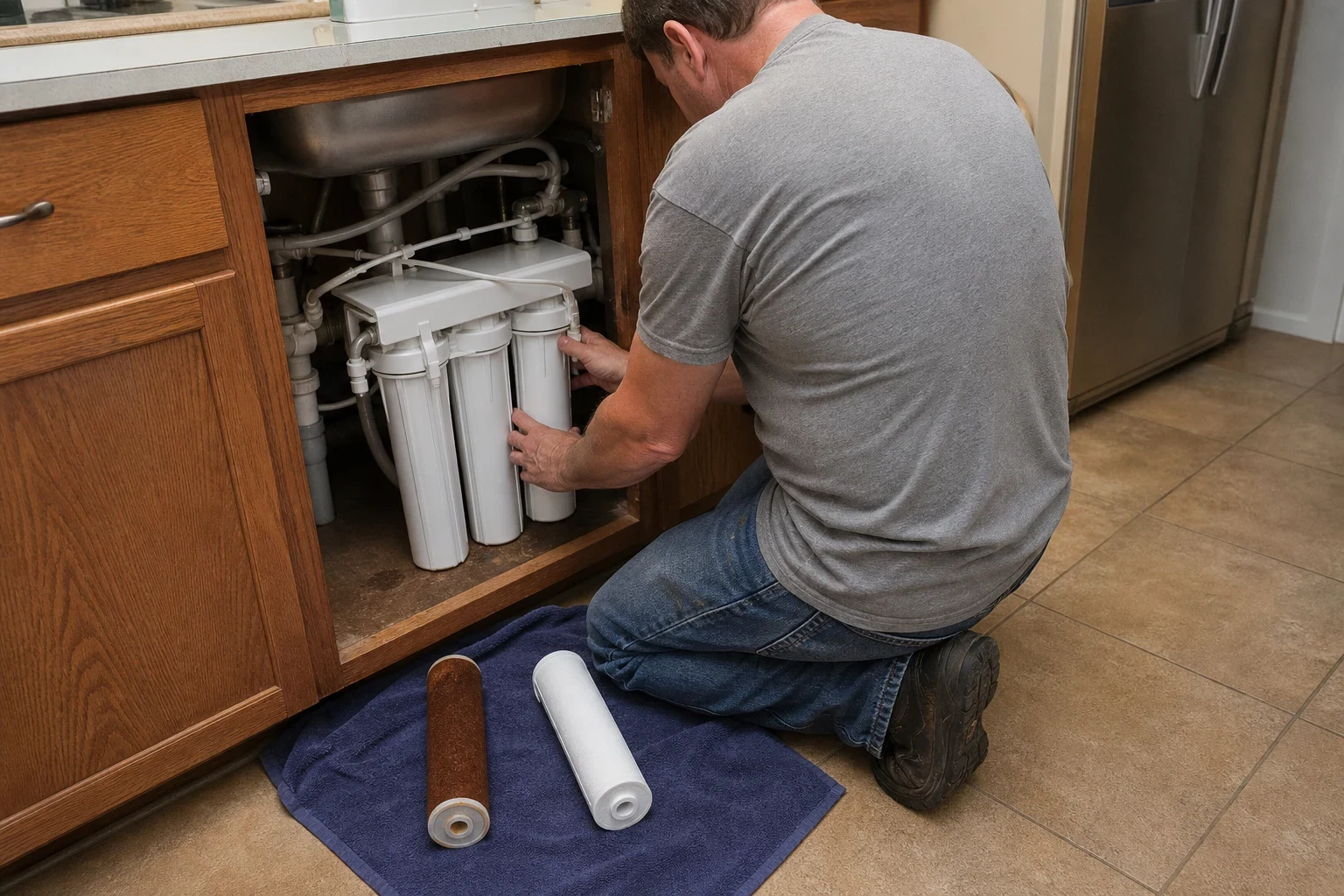
That is why we measure rather than guess. On each visit we read pressure before and after the filters, test RO output with a TDS meter, and look at the condition of what we pull out. A dark, slimy sediment cartridge tells us something different from a rust-colored one.
We are a small crew, and we keep it that way on purpose. The technician who services your system the first time is the one who comes back, keeps the notes and remembers that your kitchen RO tank sits on a sloped cabinet floor.
What a maintenance visit covers
Cartridge and membrane changes
We replace sediment, carbon and post-filter cartridges, plus the RO membrane when testing shows it is due. We use cartridges sized for your housings, so there is no bypass gap around the end caps.
O-rings and housing seals
Housing O-rings flatten and dry out over time, and that is where most slow drips start. We inspect each one, replace it if it is cracked or deformed, and seat it with food-grade silicone grease.
Sanitizing housings and RO lines
Before new cartridges go in, we clean the sumps and sanitize the RO system. Stagnant water in housings can grow biofilm, especially in warm months.
RO tank pressure check
An RO storage tank needs the right air charge to push water to the faucet. We drain the tank and check the precharge with a gauge, because a low charge is the usual reason an RO faucet trickles.
Whole-house media and control valves
For backwashing carbon, iron or sediment tanks, we check the control valve settings, the backwash cycle and the condition of the media bed. Softener visits include the brine tank, salt level and any salt bridge.
A written service record
Before we leave, you get a short note with the parts that came out, the pressure and TDS numbers we measured, and our estimate of when each cartridge should be swapped again. Our copy goes in your file, so the next visit starts from those numbers instead of from scratch.
Signs your filters are overdue
Low pressure at one tap or all of them
A clogged sediment prefilter restricts flow to everything downstream of it. If the pressure drop started gradually, a loaded cartridge is the first thing we check.
The chlorine taste is back
Spent carbon stops adsorbing disinfectant but keeps passing water. A returning pool smell at the kitchen tap usually means the carbon is exhausted.
The RO faucet is slow to fill a glass
This usually comes from a fouled membrane, clogged prefilters or a tank that has lost its air charge. We test each one so you only pay for the part that is actually causing the problem.
Moisture under the sink or at a housing
Drips at the housing threads or a damp cabinet floor usually point to a worn O-ring or a housing that was overtightened. It is a small fix that keeps the cabinet base from swelling.
You don't remember the last change
If there is no date written on the housing and no record, the cartridges are almost certainly past due.
How a service visit runs
- 1
A phone call about your system
You tell us what you have, or what you think you have, and when it was last serviced. If we already service your system, we pull up your record before we arrive.
- 2
Readings before anything is opened
We note inlet and outlet pressure, check RO output with a TDS meter and look for leaks. These numbers give us a baseline to compare against after the work is done.
- 3
Shutoff, change and clean
We close the supply valve, relieve pressure, put towels down in the cabinet, swap the cartridges, sanitize where needed and replace any worn seals.
- 4
Flush, retest and tidy up
New carbon gets flushed to clear the fines, and a new RO membrane is flushed before you drink from it. We retest, check for drips over several minutes, take the old cartridges with us and wipe the cabinet dry.
What affects the cost of maintenance
Most of the price comes from the parts. The rest depends on how many systems we service and how much testing and cleaning they need. We tell you the cost of the cartridges and labor before we start, and if a membrane or valve turns out to need replacing, we explain why first.
- Number and type of systems
- A single under-sink RO unit is a short visit. A whole-house carbon tank plus a softener plus a kitchen RO takes more time and more parts.
- Which media are due
- Sediment and carbon cartridges are changed most often. RO membranes and whole-house tank media last much longer, and they cost more when their turn comes.
- Cartridge sizes and brands
- Standard 10-inch and 20-inch housings take widely available cartridges. Proprietary twist-in filters cost more and sometimes have to be ordered ahead.
- Condition and access
- Seized housings, cracked sumps or a system wedged behind a water heater can add time. We bring it up as soon as we see it.
Filter maintenance questions
Something not covered here? (214) 463-2285
How often should my filters be changed?
Sediment prefilters and carbon cartridges typically need changing every six to twelve months. RO membranes often last two to three years, and whole-house carbon media lasts longer still. Your actual water use and what your water carries move those numbers, so we set your schedule from the readings and the condition of the cartridges we remove.
Can you service a system you didn't install?
Yes. Most systems use standard housings, and we can identify the cartridge type on site. If yours uses a proprietary filter, we note the model so we can bring the right part next time.
Will I have water during the visit?
Usually only the filtered line is off, and only for part of the visit. A whole-house tank service means a short shutoff to the whole house, and we tell you before we close the valve.
Why does new filtered water look cloudy or taste odd at first?
Fresh carbon releases fine black dust, and trapped air can make water look milky. We flush both before we leave. Any leftover cloudiness from air should clear within a day.
Do I need testing before maintenance?
Not for routine changes. If the cartridges we pull out look unusual, such as orange staining or heavy slime, we may suggest water testing so the filters match what is actually in your water.
Keep your system working the way it should
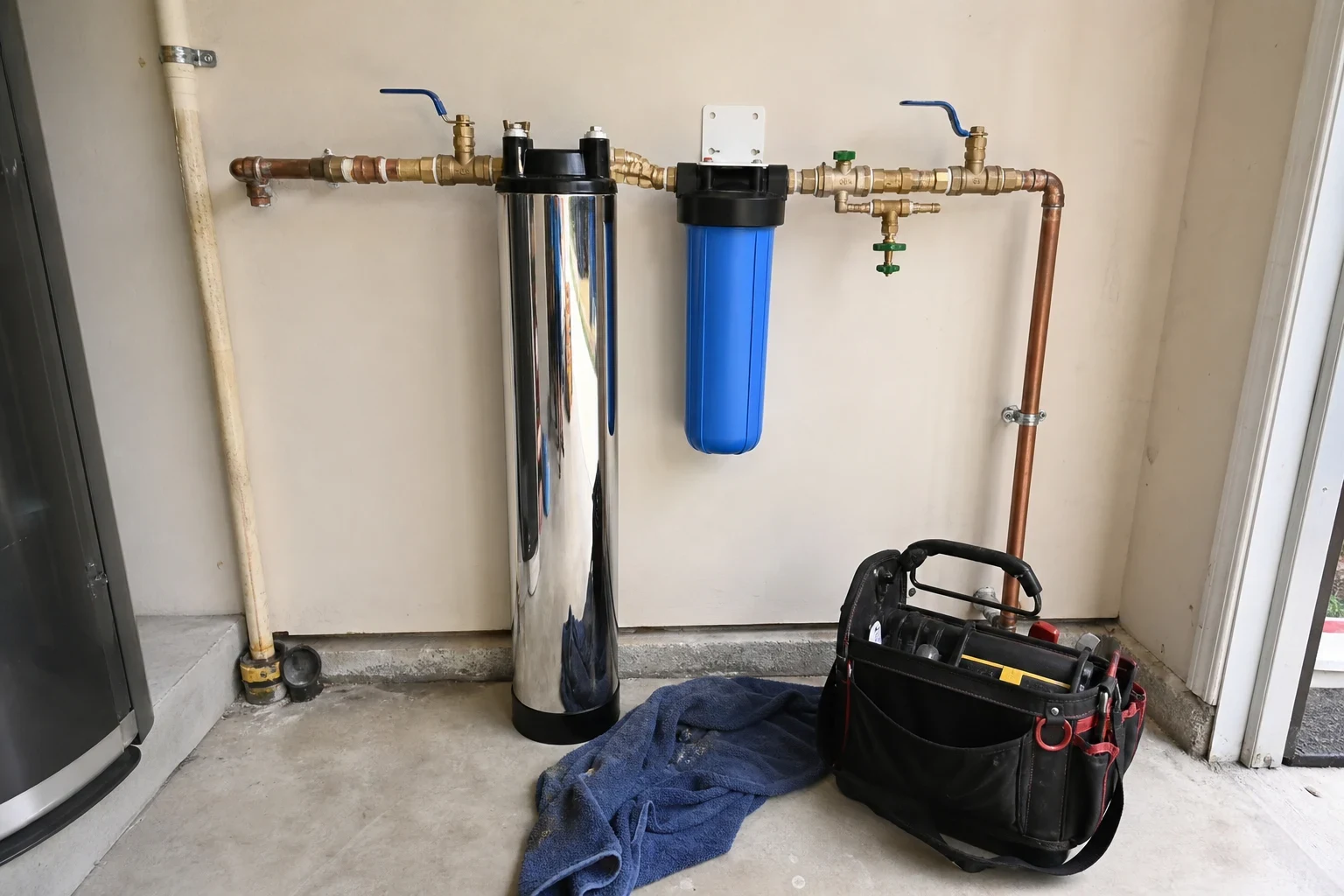
Tell us what is under your sink or in your garage, and we will work out what is due. The same technician will handle it now and on every visit after.