ServicesWater testing
Water Testing in Highland Park
We measure what actually comes out of your taps: hardness, chlorine, iron, pH, dissolved solids, and lab results for lead, copper and bacteria. One technician draws the samples, explains every number and tells you plainly whether you need equipment at all.
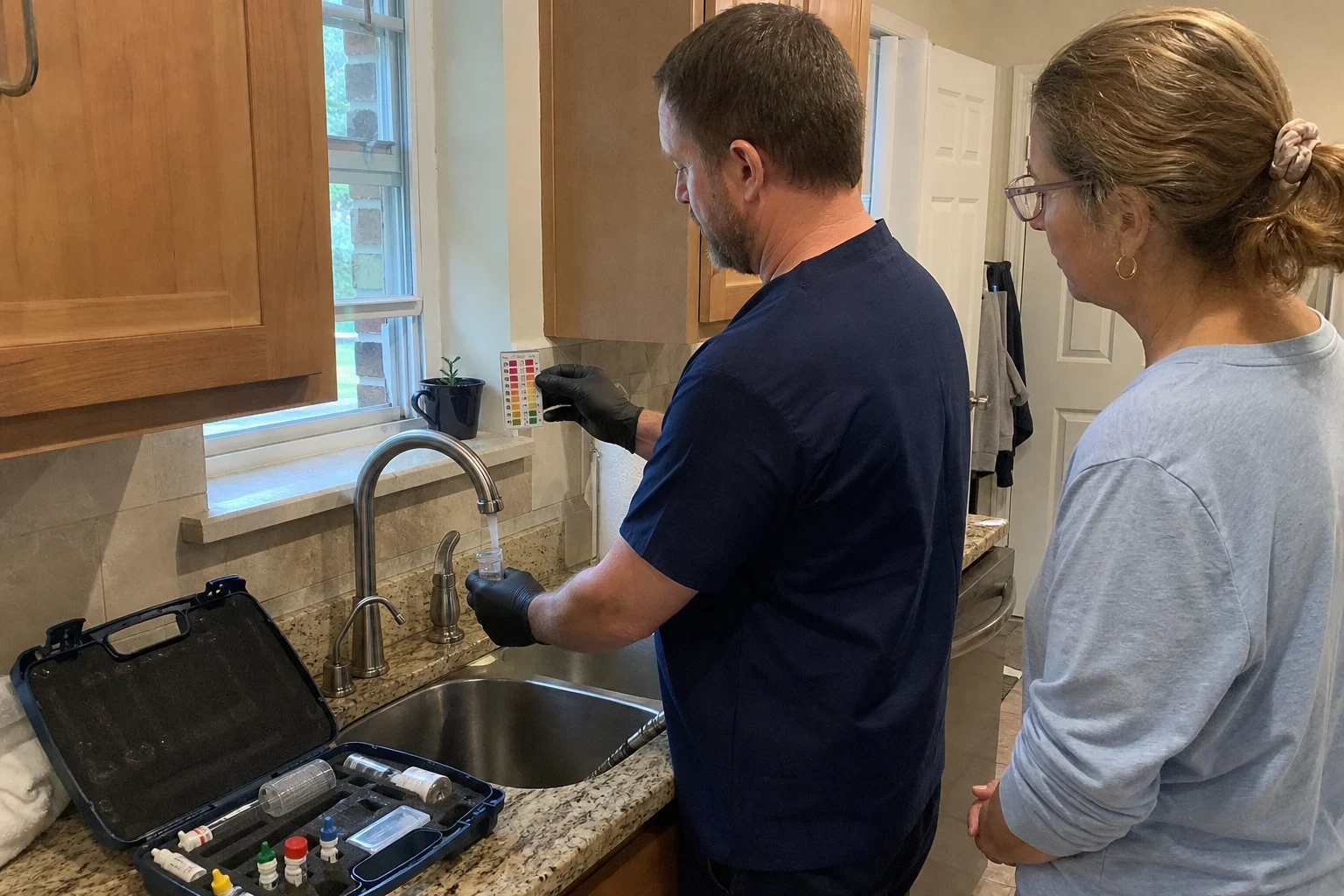
Why we test before we recommend anything
Water testing gives you numbers instead of guesses. Utility water is treated and monitored before it reaches your meter. What it picks up after that, from the service line, copper or galvanized piping, solder joints, brass valves and the water heater, only shows up in a sample drawn inside your home.
We run field tests at the sink for readings that change quickly once water leaves the pipe, like chlorine, pH and total dissolved solids. Lead, copper and bacteria go to an independent lab, because those need lab instruments to read accurately. The same person who draws your samples reviews the results with you and, if you decide on equipment, comes back to install it.
Plenty of results come back unremarkable. When yours do, we say so.
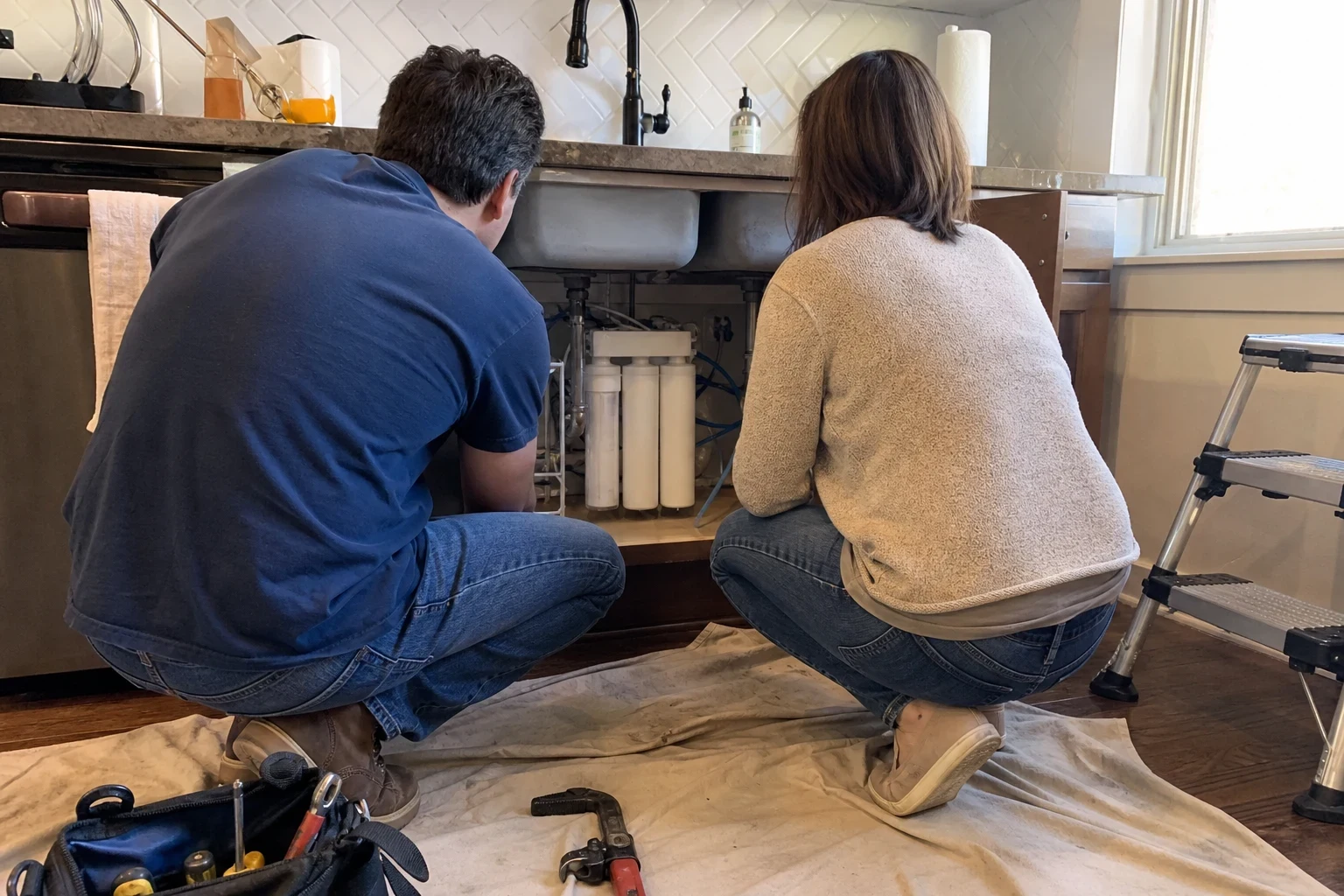
What a water test covers
- 01
Hardness, iron and manganese
We measure calcium and magnesium in grains per gallon, and iron and manganese in parts per million. These readings decide whether a softener or an iron and sediment filter is worth considering at all.
- 02
Free and total chlorine
Comparing the two tells us whether your water is disinfected with free chlorine or chloramine. That matters for equipment: standard activated carbon removes free chlorine quickly, while chloramine needs catalytic carbon and longer contact time.
- 03
pH and dissolved solids
Low pH water is aggressive toward copper and can leave blue-green stains or wear pinholes in pipe over time. A TDS reading gives a baseline we can use later to check how well a reverse osmosis membrane is performing.
- 04
Lead and copper by lab
This sample comes from water that has stood still in your plumbing for six hours or more. Standing water has had the longest contact with solder and brass fittings, so it shows the highest level you could be drinking, and that is the reading worth knowing.
- 05
Coliform bacteria screening
A sealed, sterile sample goes to the lab for a coliform check. We suggest it after major plumbing work or when there is an odor we can't explain at the tap.
- 06
Written results in plain terms
Each number is listed next to the federal limit or the level where it starts causing practical problems like staining or scale, with a short note on what it means for your home.
Questions about Water testing?
Call(214) 463-2285Signs it is time to test your water
Chlorine or pool smell at the tap
A strong disinfectant odor is common with treated city water. Testing tells us whether it is free chlorine or chloramine, which changes the right filter media.
Rotten-egg smell from hot water only
This often comes from the magnesium anode rod in the water heater reacting with the water, not from the supply. A hot and cold comparison separates the two before anyone sells you a filter.
Rust stains or reddish sediment
Orange rings in toilets or grit in aerator screens point to iron, either in the water or from corroding galvanized pipe.
White crust and spotted glassware
Scale on faucets and showerheads suggests hardness, but a reading in grains per gallon is the only way to know if it justifies a softener.
Older plumbing or recent renovation
Homes plumbed before lead solder was banned in 1986 can still have it at joints. New fixtures and pipe work can also change what reaches your glass for a while.
How a testing visit runs
- 1
A short call first
We ask roughly when your home was built, what you notice in the water and whether any filters or softeners are already installed. If we need a lead sample, we tell you which tap to leave unused overnight.
- 2
Sampling at your taps
We draw from the kitchen faucet and, where there is existing equipment, from a point before it for comparison. Field readings are done on the spot, and we note the pipe material at the main shutoff and the water heater.
- 3
Lab samples sent sealed
Lead, copper and bacteria samples are labeled, sealed and sent to an independent lab. Turnaround depends on the lab's schedule, and we phone you once the report is in.
- 4
Results with the same technician
The person who took your samples goes over the report with you. The answer might be nothing, a single under-sink reverse osmosis unit for drinking water, whole-house carbon filtration for taste and odor, or a softener only if hardness supports it.
What sets the price of a water test
The cost follows what we measure and where it gets measured. A basic set of field readings costs less than a full panel with lab work. We tell you the price for the tests you choose before we draw a single sample.
- How many parameters
- Hardness, chlorine, pH and TDS are quick field tests. Adding iron, manganese and other readings increases the work.
- Field readings versus lab analysis
- Lead, copper and bacteria require an outside lab, and the lab's fee is part of the total.
- Number of sample points
- Testing before and after an existing filter or softener means extra samples, but it shows exactly how that equipment is performing.
- Retesting after installation
- A follow-up test to confirm a new system is doing its job is usually a smaller panel focused on the readings that prompted it.
Water testing questions
Doesn't the city already test the water?
It does. The utility checks water at the plant and throughout its pipe network, and it meets drinking water standards. It can't check your service line, your home's pipes or your fixtures. We sample at your own faucet, after the water has run through all of them.
Will I be expected to buy a filter afterward?
No. The test is a separate service and you keep the results. When the numbers show no problem, we say so and don't recommend anything.
What should I do before you arrive?
If we're taking a lead sample, don't use that tap for at least six hours, usually overnight. Keep aerators and any filters in place the way you normally use them. We'll go over the details by phone.
Can you tell if my filter is still working?
Yes. We take samples ahead of the unit and after it and compare the chlorine and TDS numbers. A used-up cartridge is easy to spot, and our filter replacement and maintenance service can handle the swap.
Does the test show whether a softener makes sense?
You'll get a hardness reading in grains per gallon. We only suggest a softener when that reading and the scale in your home both back it up, and a lot of homes don't need one.
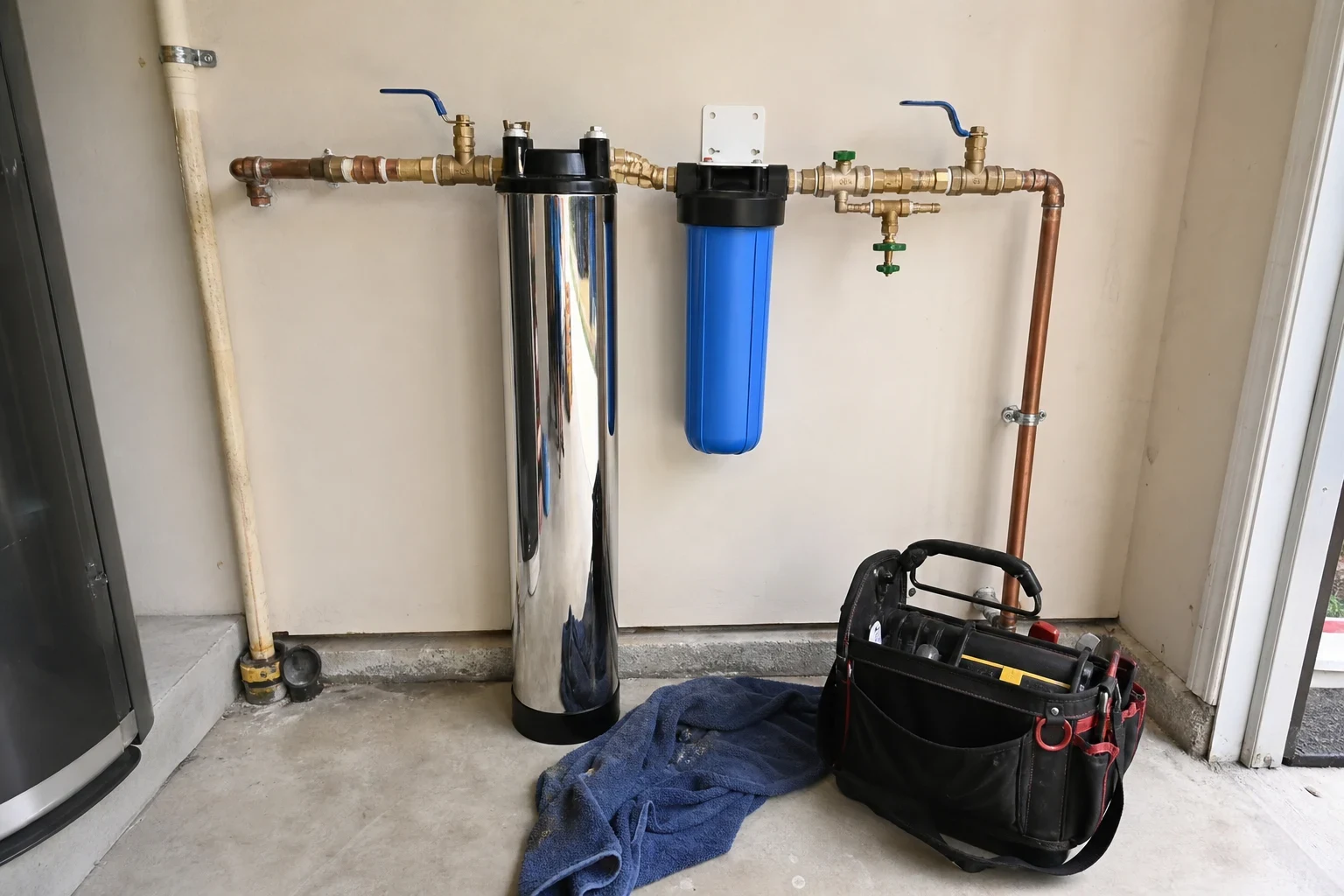
Get real numbers before you buy equipment
One technician tests your water, explains each result and handles any install that follows. Tell us what you're noticing and we'll suggest which tests make sense.