ServicesWater softeners
Water Softeners in Highland Park, After a Hardness Test
We measure your water's hardness before we talk about equipment. If the number supports a softener, we size one to how your household uses water and install it with a bypass valve and a proper drain air gap. If it doesn't, we tell you so.
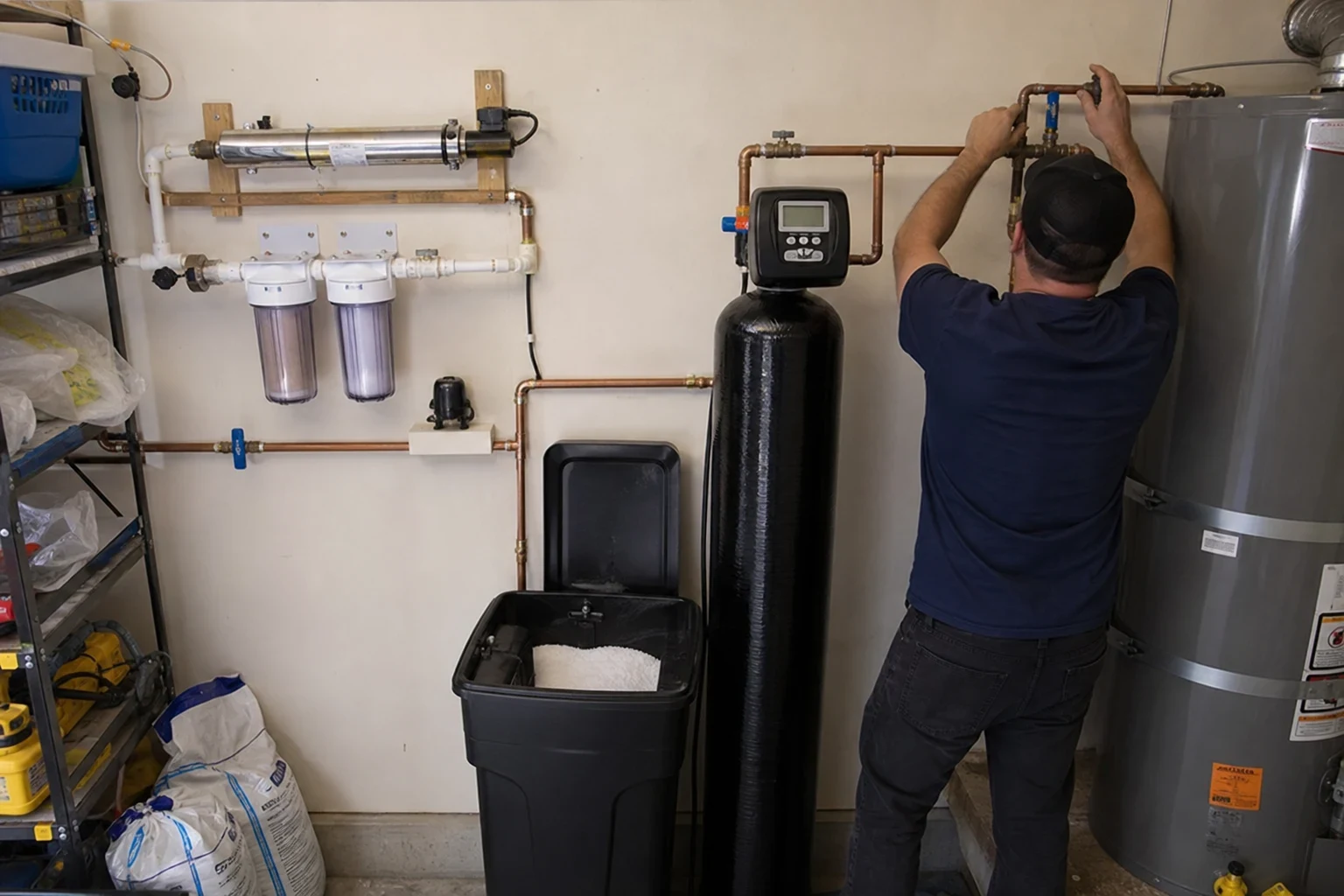
Why we test before we recommend a softener
A water softener is an ion exchange tank. Resin beads hold sodium or potassium ions and trade them for the calcium and magnesium that leave scale behind. It does nothing for chlorine taste, lead or most other contaminants, so it only earns a place in your home when hardness is high enough to cause real trouble.
That is why every softener we install starts with a measured reading in grains per gallon, taken at your tap, plus a check for iron and chlorine. Both shorten resin life, and iron adds to the load the resin has to carry. Municipal hardness can also drift with the season, so we weigh the number against what you are seeing on fixtures and in your water heater.
The same small crew that tests your water sizes the system, installs it and comes back to fine-tune the settings. Nobody hands your numbers off to an installer who has never seen them.
What a softener installation includes
- Hardness and iron reading
- We measure total hardness and iron at the tap. Iron counts against the resin too, so we fold it into a compensated hardness figure before choosing a size.
- Sizing to your household
- We multiply the number of people by typical daily use and by hardness to get grains removed per day. Then we pick a resin volume that regenerates every several days instead of every night. Oversized tanks cost more up front, and undersized ones burn through salt and water.
- Metered control valve
- We favor a demand-initiated valve that regenerates based on gallons used rather than a fixed timer. In a quiet week it uses less salt and sends less brine down the drain.
- Bypass, plumbing and drain
- The softener goes on the main line with a bypass valve so you can isolate it for service. Where the layout allows, outdoor hose bibs stay on hard water so you aren't softening lawn water. The drain line gets an air gap so backwash can't siphon back.
- Carbon stage when chlorine is present
- Chlorine slowly breaks down resin beads. If your water carries a steady residual, we talk through adding a carbon stage ahead of the softener, which also improves taste. Our whole-house carbon filtration page covers that system.
- Startup and walkthrough
- We fill the brine tank, run a manual regeneration and retest softened water at a faucet. Then we show you the bypass handle, where the salt level should sit and what the valve display means.
Signs hardness may be worth testing for
White crust that keeps coming back
Calcium carbonate is left behind when hard water evaporates on faucets and glass shower doors. Vinegar dissolves it. If it returns within days, hardness is a likely cause.
A rumbling water heater
Popping or rumbling from a tank heater often means scale has settled on the bottom. That layer insulates the water from the burner, so the heater works longer for the same hot water.
Spotty dishes and stiff laundry
Hard water reacts with soap to form curd. Detergent has to work harder, glasses come out cloudy and towels feel rough.
Clogged aerators and inlet screens
Faucet aerators, showerheads and the small screens on washer and dishwasher hoses fill with mineral grit and need cleaning or replacing more often than they should.
An old softener that seems to do nothing
Fouled resin, a stuck valve or a hard salt bridge in the brine tank can leave a softener running without softening. We test before and after the unit to find out, and our filter replacement and maintenance service handles the fix.
What moves the price of a softener
We price a softener after the test, because the hardness reading drives the size and your plumbing drives the labor. Your estimate lists equipment, materials and labor separately. Nothing gets added once work starts without a conversation with you first.
Hardness and iron level
Higher readings call for more resin and sometimes a larger brine tank. Significant iron may need its own treatment first, which we cover under iron and sediment filtration.
Location and plumbing access
A home with an existing softener loop in the garage is quick work. Cutting into the main line, running a long drain or adding an outlet near the tanks takes more time and material.
Valve and tank configuration
A metered single-tank valve suits most homes. A twin-tank setup, which keeps soft water flowing during regeneration, costs more.
Pre-treatment
A carbon stage for chlorine or a sediment filter for grit adds equipment, fittings and labor ahead of the softener.
Removing an old unit
Hauling out a dead softener is simple. Replacing corroded fittings or a leaking bypass behind it adds to the job.
How a softener job runs, start to finish
- 1
Hardness test at your tap
We read hardness, iron, pH and chlorine on site, and you see the numbers as we do. If hardness is low, we say so plainly, because a softener would only add salt to your water. For questions beyond hardness, our water testing service sends samples to an independent lab.
- 2
Written sizing and estimate
We write out the grains-per-day math, the tank and valve we recommend and any plumbing changes. Each cost sits on its own line.
- 3
Install day
We shut off the main, cut in the bypass and fittings, set the resin and brine tanks on a level surface, run the drain with its air gap and connect the valve. Your water is off for part of the visit, and we tell you when before we start.
- 4
Programming and retest
We enter hardness, household size and a regeneration time, usually overnight when nobody is running water. A retest at the tap confirms the softened water reads near zero.
- 5
Follow-up visit
The same people come back after you've lived with it for a while. We check salt use and adjust the settings to match how your household really uses water.
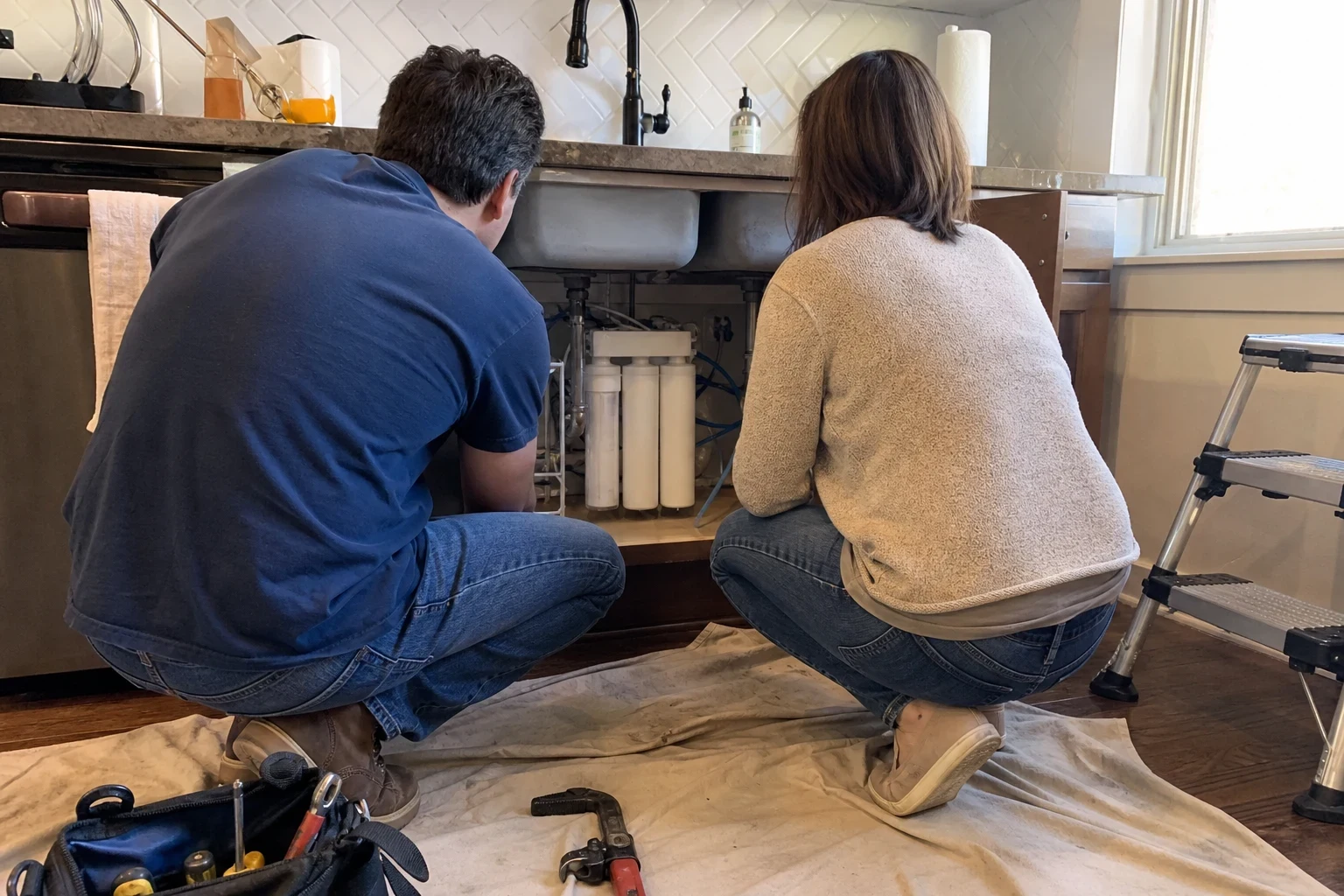
Softener questions we hear
Do I actually need a water softener?
Possibly not. At low hardness readings the scale problem is minor, and the cost of salt, water and upkeep usually outweighs the benefit. We give you the reading and our straight opinion, and you decide.
Will softened water taste salty?
The sodium added rises with hardness, so at moderate levels it is small and most people don't taste it. Potassium chloride can replace salt in the brine tank. If you'd rather drink unsoftened water, an under-sink reverse osmosis system at the kitchen tap removes most of that sodium.
Does a softener remove chlorine or lead?
No. Ion exchange targets calcium, magnesium and small amounts of iron. Chlorine taste is a job for carbon filtration, and lead from older plumbing is best handled by reverse osmosis at the tap you drink from.
How much salt will it use, and how do I keep up with it?
That depends on your hardness and how much water you use, which is why we set up a metered valve. Check the brine tank about once a month and keep salt above the water line. If the salt forms a hard crust, break it up so brine can form underneath.
Where does the softener go in my home?
Usually in the garage or a utility room near where the main line enters. It needs a level floor, a drain for backwash and an electrical outlet for the valve. We look at your layout during the test visit and explain the options.
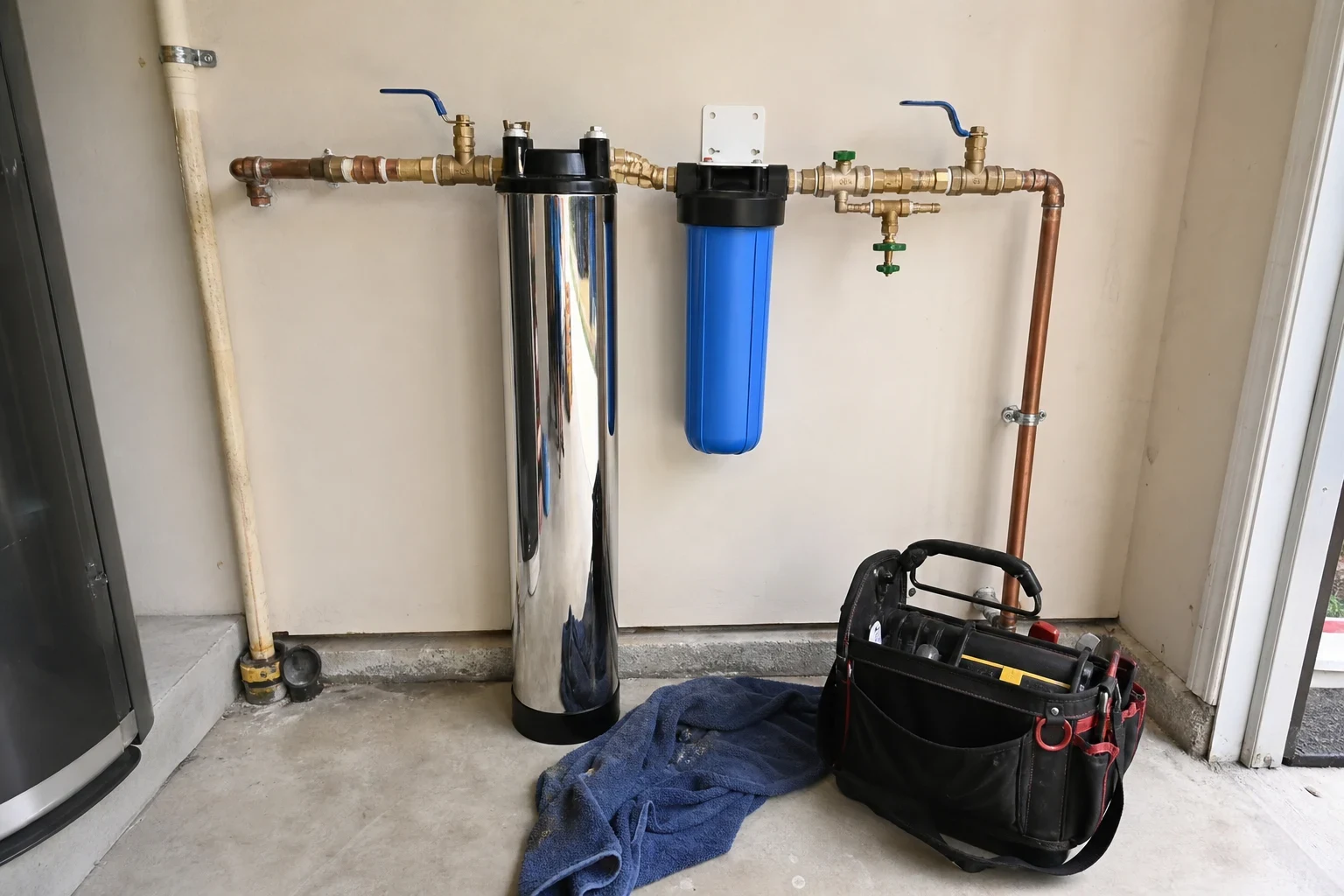
Get a hardness number before you buy anything
We test, size and install with the same small crew, and we tell you plainly when a softener isn't worth it. One phone call sets up the visit.