ServicesIron and sediment filtration
Iron and Sediment Filtration in Highland Park
Orange stains in the tub, grit in aerator screens and cloudy first glasses all have a cause. We test your water, trace where the iron or sediment comes from, then install a filter at the main line that matches what we found.
What iron and sediment filtration actually fixes
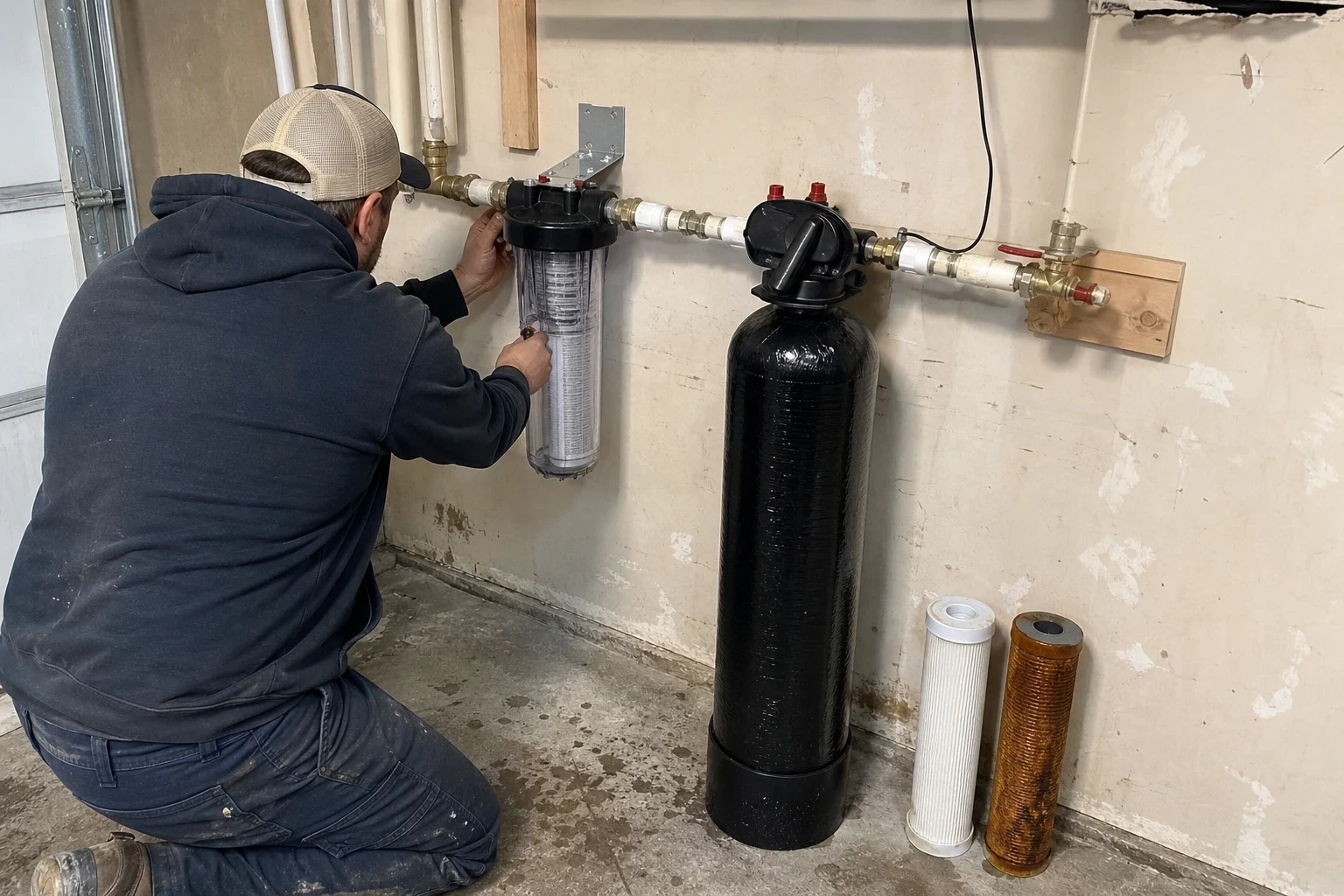
Sediment is anything solid riding in the water: sand, pipe scale, rust flakes, bits of old gasket. Iron comes in two forms. Particulate (ferric) iron is already rust and shows up as orange or brown specks. Dissolved (ferrous) iron runs clear from the tap, then oxidizes into orange staining once it meets air in a toilet tank or on a sink. Each form needs a different filter, which is why we test before we recommend anything.
In many homes around Highland Park, the iron is not in the city supply at all. It comes from aging galvanized steel lines or a corroding water heater tank. When that is the case, we tell you plainly, because a filter downstream only catches the symptom. Where the problem is grit and rust reaching your fixtures, a properly sized point-of-entry system stops it and protects everything after it.
We are a small crew, and the person who tests your water is the same person who installs the filter and comes back for the first cartridge change.
What the work includes
- 01
Iron and turbidity testing
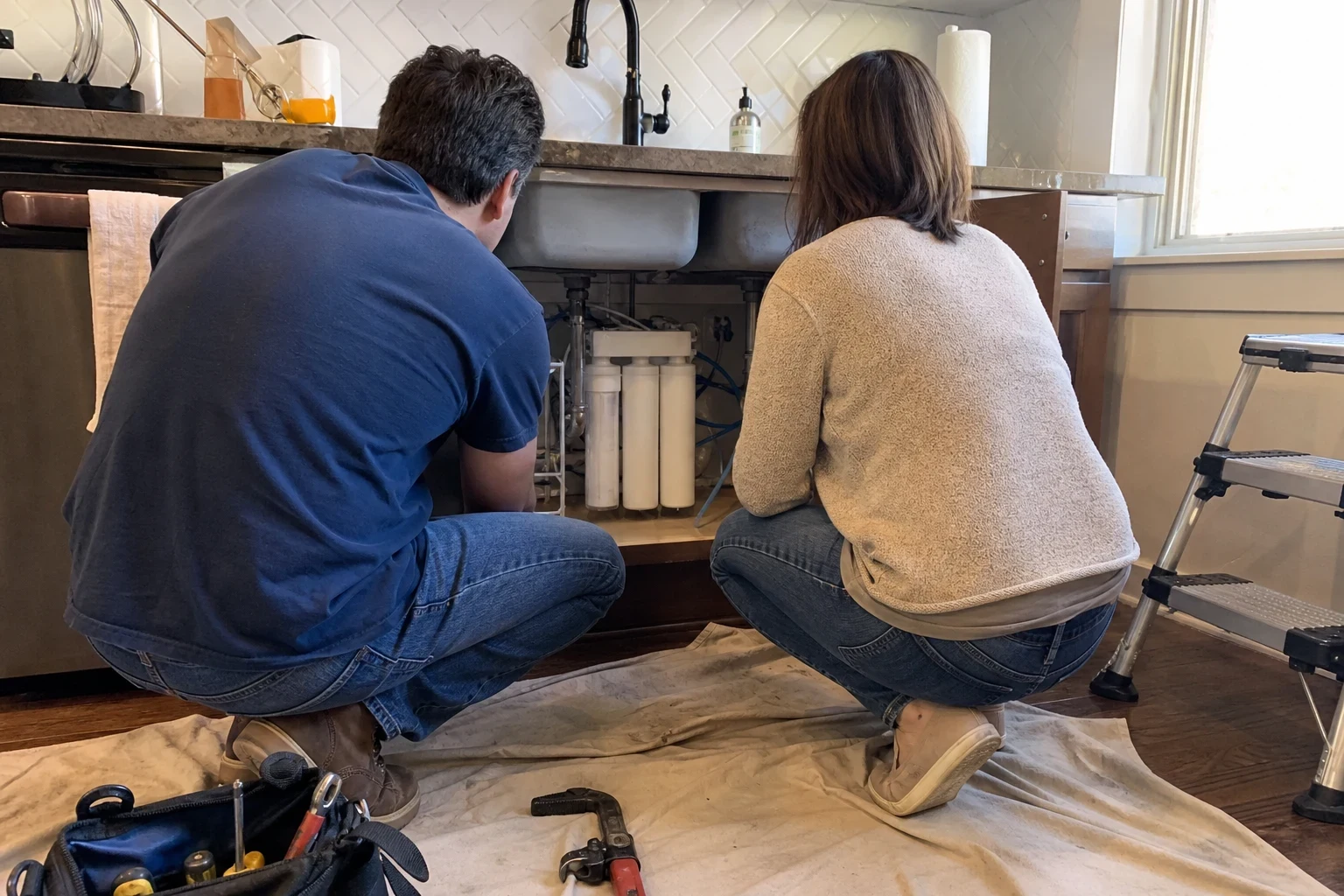
We check total iron, and separate dissolved from particulate when it matters. We also look at sediment on a white filter pad so you can see what is coming through.
- 02
Spin-down or cartridge sediment filter
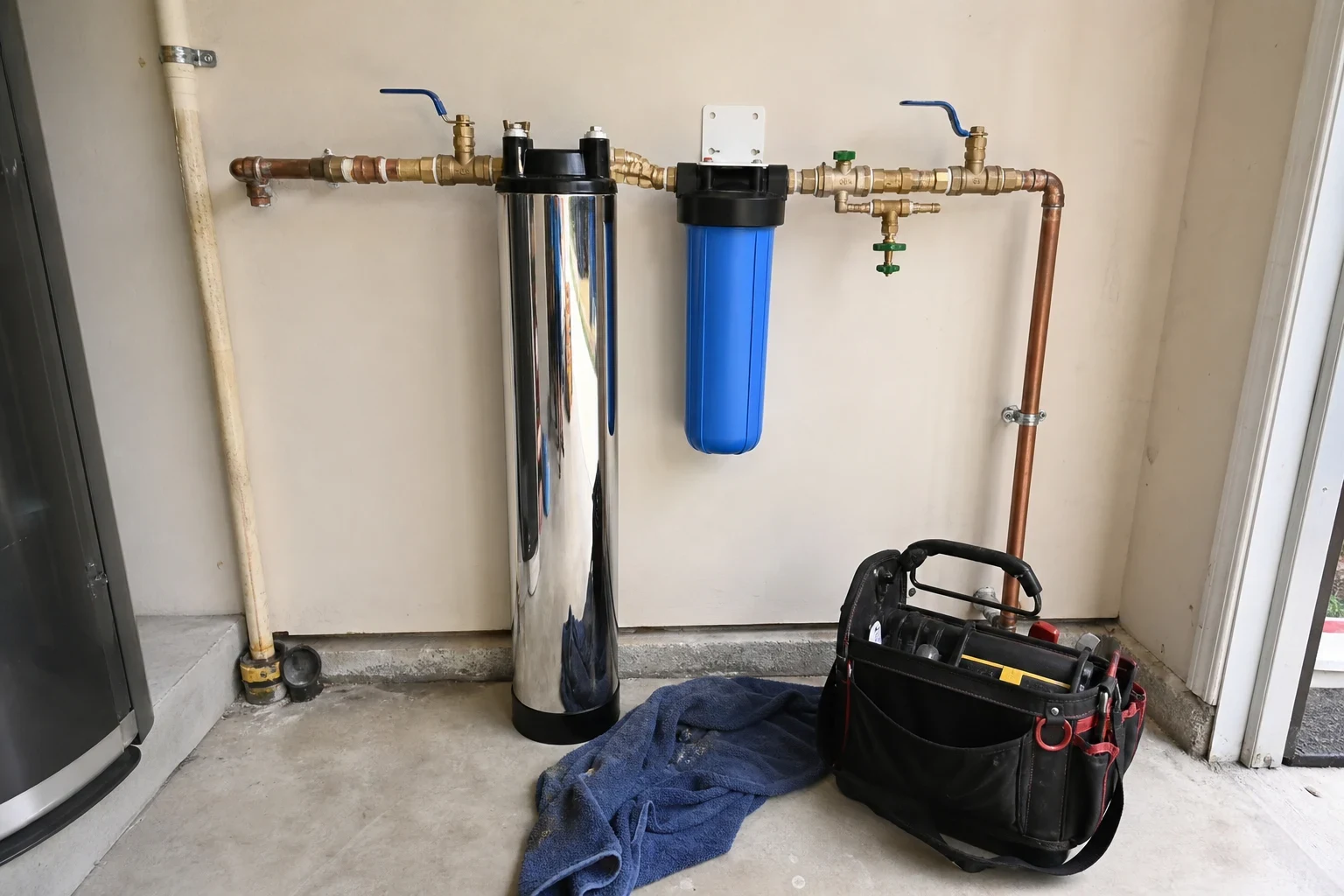
For loose grit and rust flakes, a spin-down unit with a stainless mesh screen catches the coarse material and flushes out through a ball valve. A pleated or melt-blown polypropylene cartridge after it handles finer particles, typically staged from coarse to fine so neither stage clogs early.
- 03
Oxidizing media for dissolved iron
When the test shows dissolved iron, a cartridge will not catch it. We use a backwashing tank with oxidizing media that converts ferrous iron to particles and traps them, then rinses itself to a drain on a timed cycle.
- 04
Bypass valve and pressure gauges
Every system gets a bypass so water stays on during service. Gauges before and after the filter show the pressure drop, which tells you exactly when a cartridge is loaded instead of guessing by the calendar.
- 05
Cleanup and a walkthrough
We cap and label the lines, wipe down the area and show you how to read the gauges and flush the spin-down screen.
Questions about Iron and sediment filtration?
Call(214) 463-2285Signs grit or iron is getting into your water
Orange or brown rings
Staining in toilet bowls, tubs and under faucets points to iron oxidizing on contact with air.
Clogged aerators and showerheads
If you keep unscrewing aerator screens to clear sand or flakes, sediment is passing through your plumbing.
Rusty water after the tap sits
Brown water first thing in the morning that clears after a minute often means corroding pipe inside the house rather than the supply.
Short-lived filters downstream
A carbon system or reverse osmosis prefilter that turns brown and loads up in weeks is doing a sediment filter's job.
Stained laundry
Yellow or rust spots on white loads, especially from a washer on a long run of pipe, suggest iron in the hot or cold line.
How the job runs
- 1
Test and trace
We test at the tap and, where we can, near where the line enters the house. Comparing the two helps show whether the iron starts outside or inside your plumbing.
- 2
Written recommendation
You get a line-item estimate naming the filter type, micron ratings, location and any drain or outlet the system needs. If the testing points to a cause no filter can solve, such as corroding pipe, you hear that from us before anything else.
- 3
The work itself
With the main valve closed, we tie the system into the line where it enters your home, usually in the garage or beside the water heater, then mount the bypass, filter housings and gauges. A cartridge setup is often finished in a few hours. A backwashing tank runs longer because it needs its own drain line.
- 4
Flush and check
We flush the new filter, check for leaks, record starting pressure and retest a sample so you can see the difference.
What moves the price
Cost depends mostly on what the test finds and how your main line is laid out. A simple sediment cartridge setup and a backwashing iron system are very different jobs. We price after testing, in writing, so you know the number before any pipe is cut.
- Type of iron and sediment
- Particulate rust and grit need mechanical filtration. Dissolved iron needs oxidizing media in a larger tank with its own control valve.
- Pipe size and flow
- A one-inch main feeding several bathrooms calls for bigger housings or a larger tank. Undersized equipment chokes flow the moment more than one fixture is in use.
- Location and access
- A clear wall in the garage is quicker than a cramped closet or an outdoor spot that needs a cover against summer heat.
- Drain, power and permits
- Backwashing systems need a drain and an outlet nearby. If the city requires a plumbing permit for main line work, we pull it and include it.
- Ongoing cartridges
- Cartridge systems have replacement costs over time; media tanks have fewer parts to swap. Our filter replacement and maintenance service covers either.
Questions about iron and sediment filters
Will the filter clear up stains that are already there?
No. It keeps new iron away from your fixtures, but old stains have to be cleaned off with an iron stain remover. After the filter goes in, they shouldn't return as quickly.
Will a sediment filter cut my water pressure?
A properly sized filter drops pressure only slightly when it's new. The drop grows as the cartridge fills, which is why we fit gauges. Once the gap between the two readings widens, the cartridge is due.
How long does a cartridge last?
That comes down to how much sediment is in your water. Some homes get many months, while homes with old pipe that sheds rust go through them much quicker. We read the gauges on the first visit and build a schedule from what we find.
Why would city water have iron in it?
Treated city water normally has little iron, but galvanized steel pipe and aging water heater tanks rust from the inside. Main breaks and line flushing can also loosen sediment for a time. A test shows which of these is behind yours.
Does this go ahead of my carbon system or softener?
Yes. The sediment filter comes first so grit doesn't clog whole-house carbon filtration, a softener or the prefilters on under-sink reverse osmosis. Those systems last longer and work as rated when they get clean water.
Find out where the rust is coming from
Start with a test so the filter matches the problem. The same crew member handles your test, install and follow-up.