ServicesUnder-sink reverse osmosis
Under-Sink Reverse Osmosis in Highland Park
Your drinking and cooking water passes through a sediment filter, a carbon block and a fine membrane before it reaches its own faucet at your kitchen sink. One small crew measures the cabinet, fits the system and comes back for every filter change.
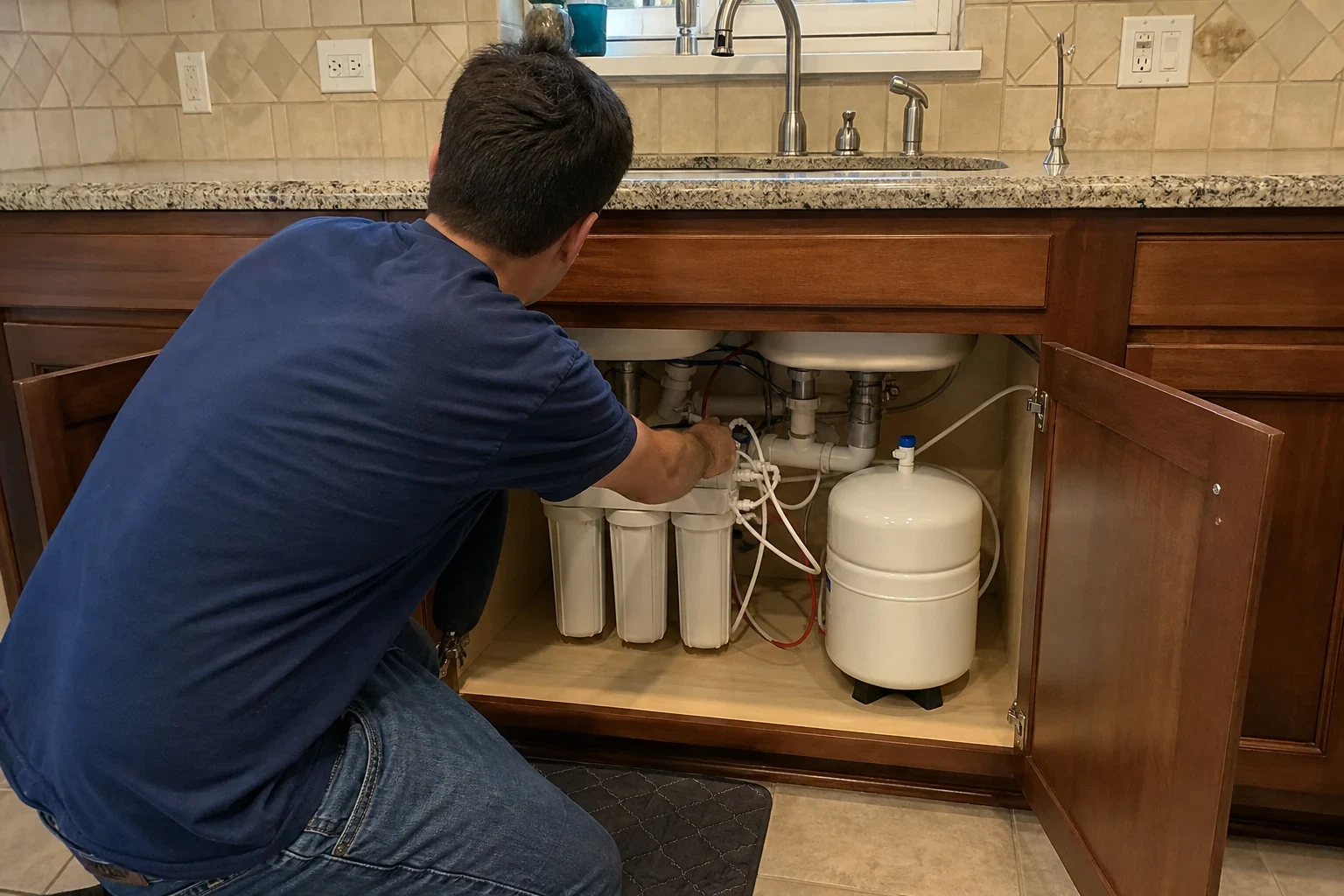
What an under-sink RO system does
In reverse osmosis, water is forced through a thin-film composite membrane whose pores are fine enough to stop dissolved solids, lead, arsenic, nitrates and many trace contaminants. Ahead of the membrane, a sediment filter traps grit and a carbon block takes out chlorine, which would otherwise harm the membrane. The treated water fills a small pressurized tank that supplies its own faucet at the sink.
Since it feeds just one faucet, the entire system fits inside a kitchen cabinet instead of the garage. If the chlorine smell bothers you in the shower or at every faucet, whole-house carbon filtration treats all your plumbing, and plenty of homes use both.
Our team is small, so whoever checks your sink at the first visit also installs the system. Things we spot early, such as a cramped cabinet or weak water pressure, stay with the job instead of falling between a salesperson and an installer.
What the installation includes
Sizing to your water and pressure
We check incoming water pressure at the kitchen line before choosing a system. Membranes need steady pressure to produce water efficiently, and if yours runs low we explain whether a permeate pump or booster makes sense.
Filter stages and membrane
A standard setup runs sediment, carbon block, the RO membrane and a final carbon polishing filter. We tell you what each stage removes and how often it needs changing.
Dedicated faucet and drain connection
We mount the faucet in an existing sprayer or soap hole, or drill the countertop when you approve it. The reject line connects to the drain with a drain saddle placed above the trap so wastewater cannot siphon back.
Storage tank placement
The tank goes where it leaves you the most cabinet room, sometimes in an adjacent cabinet when the sink base is crowded.
Leak check and walkthrough
We flush the system, check every fitting under pressure and show you the shutoff valve, the filter housings and what a normal tank fill sounds like.
Signs an RO system is the right call
Older supply plumbing
Homes with original galvanized pipe or copper joined with older solder can add lead and metals at the tap even when the city water leaves the plant clean. RO is one of the few point-of-use methods that reliably reduces lead.
You buy bottled water
If cases of bottled water are a weekly habit, an RO faucet gives you similar water from your own sink without the plastic or the hauling.
Test results show dissolved solids or metals
When water testing turns up high total dissolved solids, nitrates or arsenic, carbon alone will not touch them. A membrane will.
Coffee, ice and cooking taste off
Mineral and chlorine notes show up first in coffee, tea and clear ice. RO with a carbon stage removes both.
How the job runs
- 1
A call to start
Tell us about your sink, what worries you about your water and any test results you have. We'll ask how the cabinet is laid out and whether you want the fridge ice maker hooked up.
- 2
Checking the sink and the water
We read the pressure, measure the cabinet and take a dissolved solids reading at the tap so you have a starting number. Then you get a written estimate listing the system and every part.
- 3
The install
A typical install runs a few hours. We put a mat in the cabinet, close the cold line, add a feed valve, mount the faucet, tank and filter manifold, and flush the carbon and membrane before you pour a glass.
- 4
Once it's running
We retest the RO water so you can see the before and after numbers side by side. Your filter replacement and maintenance visits come from the same crew, who already know your setup.
What moves the price
The price depends mostly on the system you choose and how your kitchen is built. We price each job in writing after seeing the sink, so you know what is included before we start.
- Number of stages
- Adding a remineralization stage or UV lamp adds parts and housings. We only suggest them when your water or preferences call for it.
- Countertop material
- Drilling granite, quartz or porcelain for the faucet takes specific bits and more time than using an existing hole.
- Water pressure
- Low pressure may mean adding a permeate pump or booster pump so the membrane produces water at a reasonable rate.
- Extra connections
- Running a line to a refrigerator or ice maker adds tubing, fittings and sometimes a trip through the cabinet floor.
Under-sink RO questions
Something not covered here? (214) 463-2285
Does an RO system send water down the drain?
Some, yes. The membrane cleans itself by flushing part of the water to the drain, and how much depends on your pressure and the system's design. A permeate pump or a higher efficiency membrane cuts that amount noticeably, and we will walk you through the tradeoff at your pressure.
Does RO take out the good minerals too?
It strips most dissolved minerals along with contaminants. That rarely matters, because food provides far more minerals than water does. If you like a mineral taste, a remineralization cartridge after the membrane puts a little calcium and magnesium back in.
When do the filters need to be replaced?
Plan on changing the prefilters and carbon stages roughly once a year. The membrane lasts longer when those are kept current, since chlorine getting through to it is the usual cause of early wear. We can set you up on a regular filter replacement schedule.
Do I need a water test before an RO install?
It is not required, but we suggest it. The numbers tell us whether a membrane by itself covers your concern or whether iron and sediment filtration belongs upstream so the membrane does not foul. Our water testing service gets you those results before you pick a system.
Can it fit under a sink that has a disposal?
In most kitchens, yes. The tank and filter manifold can go on either side of the disposal, and if the space is too tight we put the tank in the cabinet next door.
Get cleaner drinking water from your kitchen tap
Tell us about your sink and your water, and we will explain which system fits and what the install involves. You will deal with the same people from the first visit through every filter change.