ServicesWhole-house carbon filtration
Whole-House Carbon Filtration in Highland Park
A carbon tank fitted where the main line enters your home strips chlorine taste and smell from every faucet, shower and appliance. One small crew handles your test, sizing, installation and later media changes, so nobody has to relearn your plumbing.
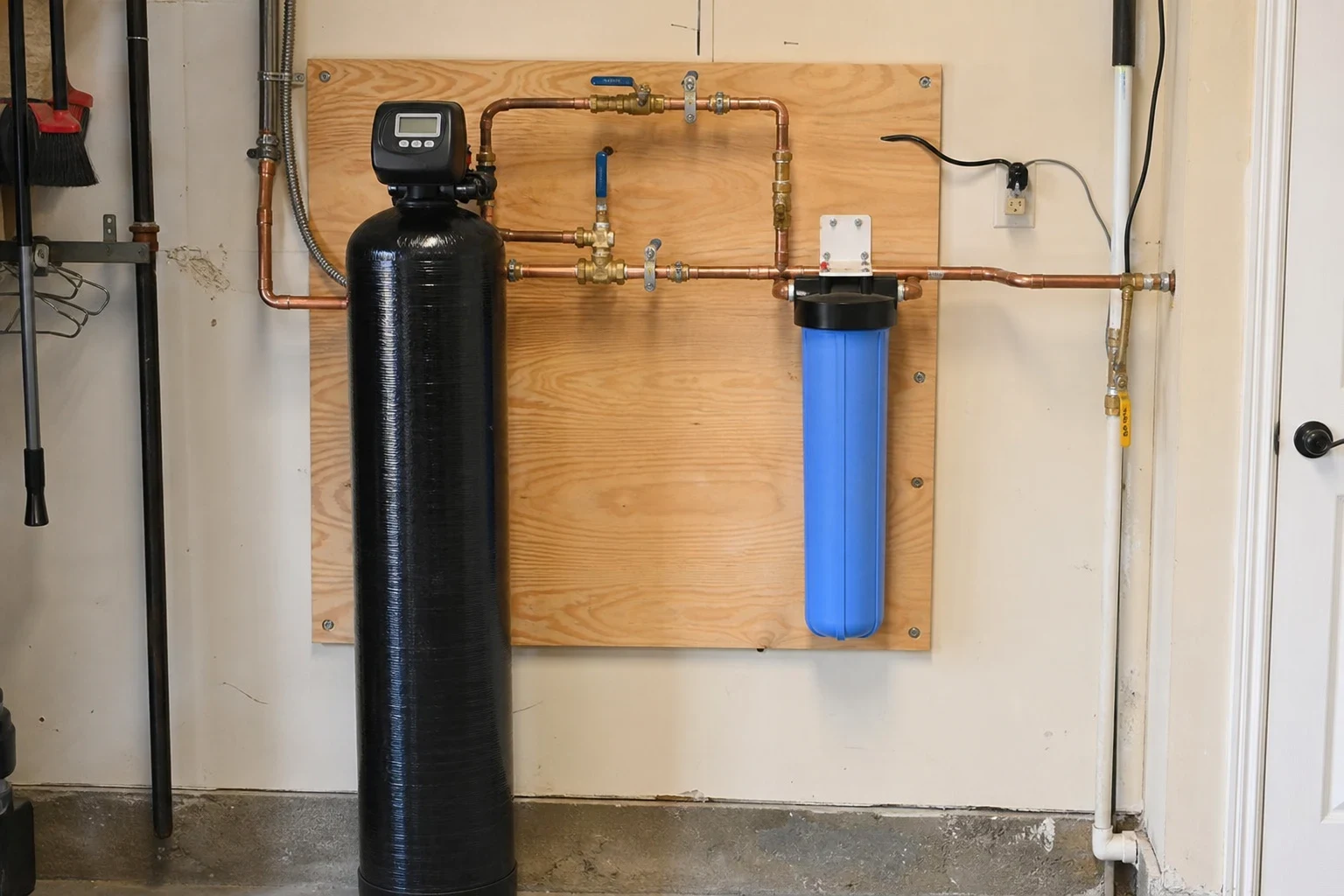
How carbon treats the water for your whole home
Your utility adds a disinfectant to keep water safe on its way through the mains, and that part is worth having. What lingers, either chlorine or chloramine depending on the supplier, is the taste in your glass and the sharp smell in a hot shower. Activated carbon traps those compounds in its pores as water moves through the bed, along with many organic chemicals behind off flavors.
A whole-house system sits where the main line enters your home, often in the garage or near the water heater. One tank treats all the water, so showers, laundry, the ice maker and the kitchen tap all improve at once.
Carbon is the right call when taste, odor and disinfectant are the complaint. It does not remove hardness, iron or dissolved minerals. If your test shows those, we will say so and point you to iron and sediment filtration or a water softener instead of overselling carbon.
What the work includes
- A water test before sizing
- We check disinfectant level, hardness and iron at your tap first. Chloramine needs catalytic carbon, which costs more than standard granular carbon, so the test decides the media.
- A tank sized to your flow
- We count bathrooms and fixtures to estimate peak gallons per minute. A tank that is too small lets water rush past the carbon without enough contact time, and the taste comes back early.
- Sediment prefilter
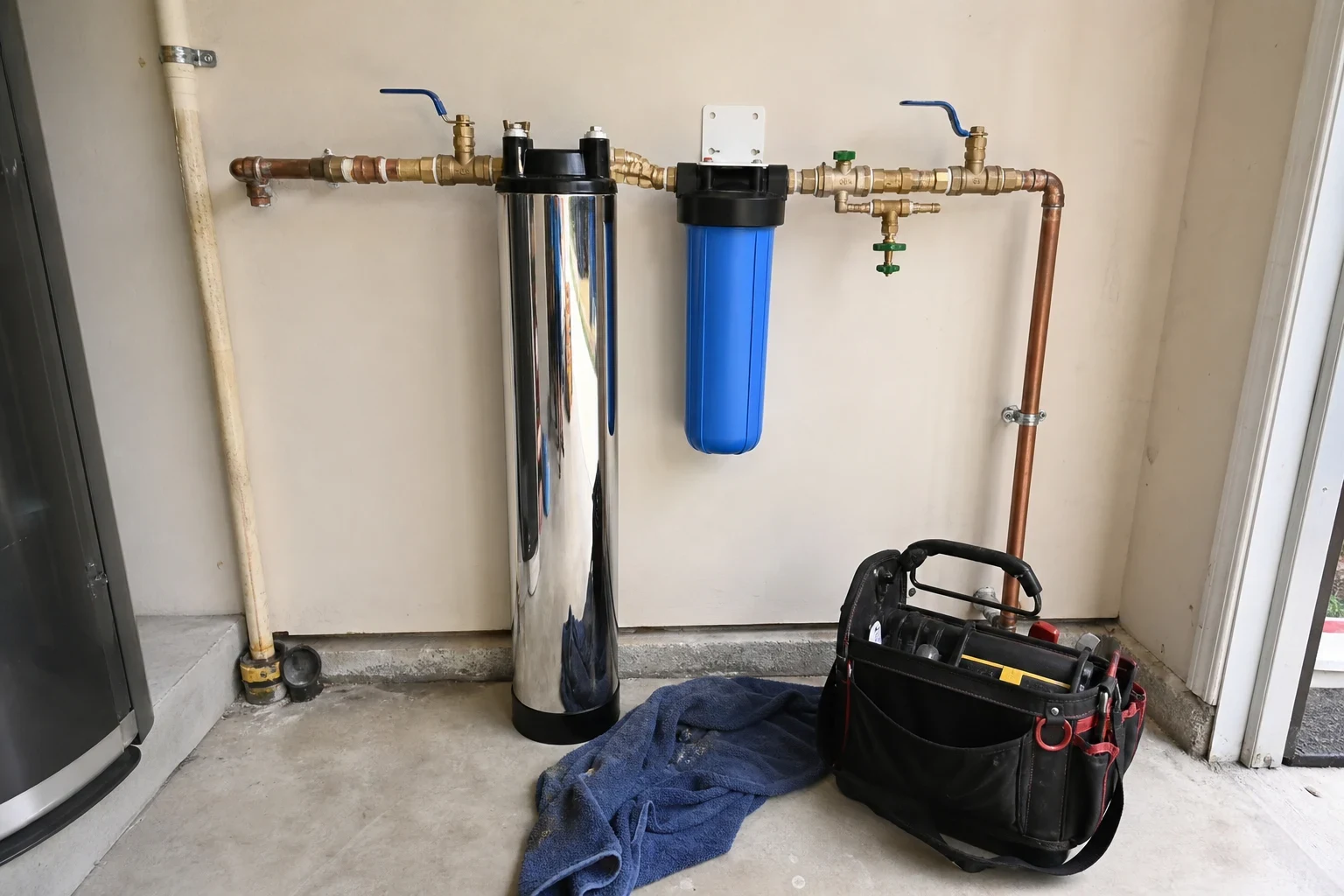
- A cartridge ahead of the tank catches sand and pipe scale so the carbon bed does not clog and lose flow.
- Bypass valve and shutoffs
- We plumb in a three-valve bypass so you keep running water during media changes or any service visit.
- Clean install and walkthrough
- We protect the floor, flush the new carbon until fines clear, check for leaks under pressure and show you where the bypass is and how to read the prefilter.
Signs carbon filtration fits your home
A chlorine smell in the bathroom
Steam from hot water carries chlorine into the air, so the bathroom is where you notice it most. A pitcher filter does nothing for that.
Coffee or tea that tastes off
Disinfectant reacts with the oils that give coffee and tea their flavor. Most people can taste the change within a day of filtered water.
Skin and hair feel dry after a shower
A lot of customers tell us showers feel softer on the skin with the chlorine gone. Not everyone notices the same effect.
Too many small filters to keep up with
Pitchers, shower head filters and fridge cartridges each cost money. A single system on the main line can take the place of most of them.
Washers and seals failing sooner than expected
Chloramine tends to wear down certain rubber washers and toilet flappers faster than chlorine on its own does.
What moves the price
We do not quote a price until we have seen your water and your plumbing. The estimate lists each part and labor item separately, so you can see what you are paying for.
Carbon type
Standard granular carbon handles chlorine well. Catalytic carbon is needed for chloramine and costs more per cubic foot.
Tank size
More bathrooms and higher peak flow call for more carbon, which means a larger tank and more media.
Access to the main line
An open garage wall is quick work. A line buried in a finished wall or coming up through the slab in a tight spot takes more labor.
Drain and electrical
Backwashing tanks need a drain and often an outlet nearby. Upflow tanks need neither, which can lower the install cost.
Permit
If the city requires a plumbing permit for the work, we pull it and include the fee on the estimate.
How an install day runs
- 1
Testing and a written quote
First we check your water, find where the main line comes in and hand you an estimate broken out line by line. We book nothing until you say yes.
- 2
Main off, system in
With the main closed, we open the line and set the prefilter, carbon tank and bypass. Expect the water to be off for a few hours in most homes, not all day.
- 3
Rinse and test under pressure
Fresh carbon sheds black dust, so we rinse or backflush it to the drain until the water comes out clear, then put every joint under full pressure to check it.
- 4
The same crew comes back
Media changes and filter replacement and maintenance are done by the people who put the system in, so your plumbing is already familiar to them.
Carbon filtration questions
Will my water pressure drop after the install?
Not noticeably, if the tank matches your flow. Pressure loss usually traces back to an undersized tank or a prefilter cartridge packed with sediment. We size from your peak demand and show you how to spot a cartridge that is due for a change.
Does whole-house carbon remove lead?
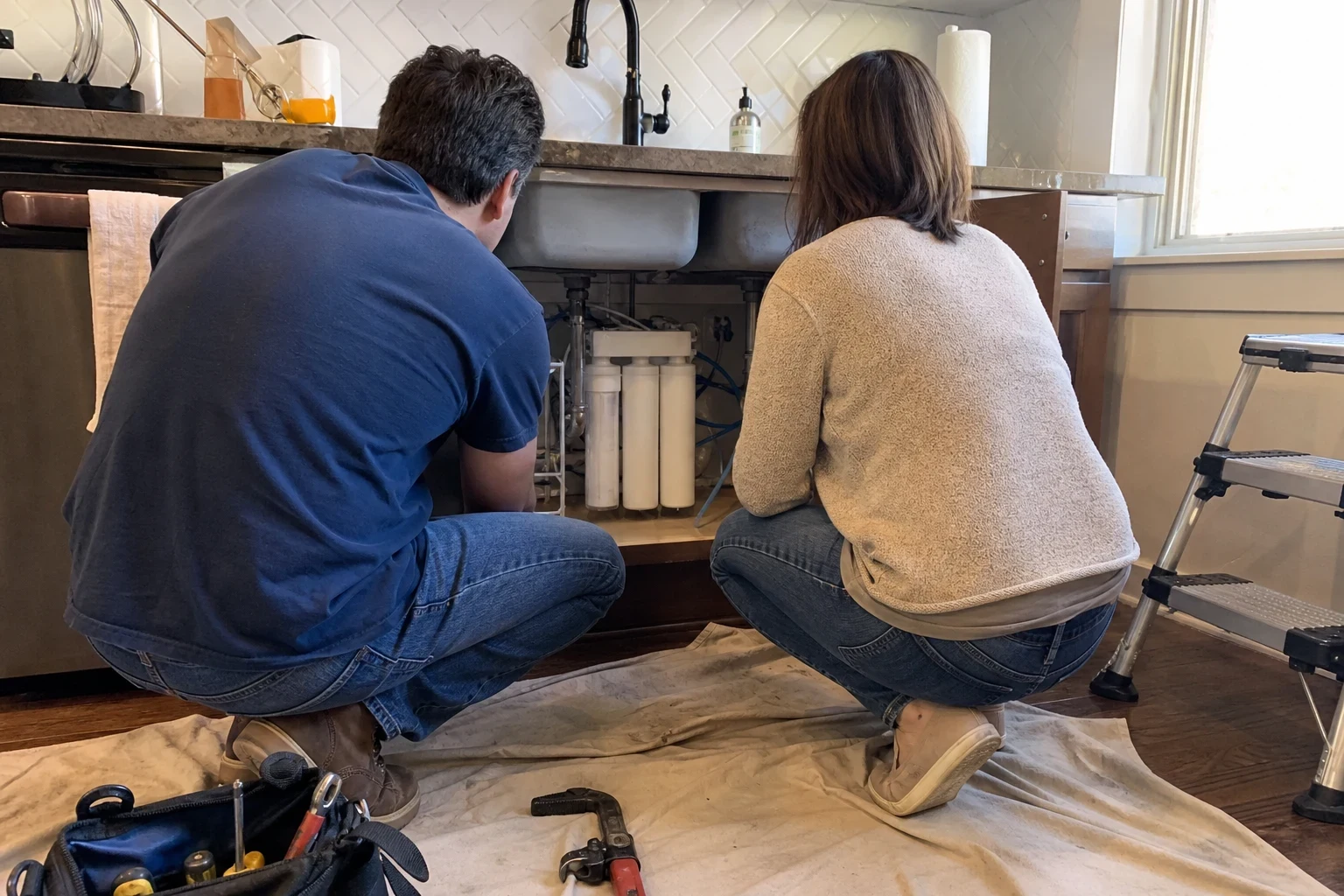
Standard whole-house carbon is not rated for lead. If lead from old plumbing is the worry, start with water testing, and consider under-sink reverse osmosis for drinking and cooking water.
How often does the carbon need replacing?
It depends on how many gallons your home uses and how much disinfectant is in the water. We estimate a schedule at install and check the water at each visit rather than changing media before it is spent.
Is it safe to remove the disinfectant?
The water has already been treated by the utility, and you use it soon after it passes the filter. We do recommend running taps that sit unused for long stretches, such as in a guest bath.
Do I still need an under-sink system?
Not for taste. Carbon handles chlorine for the whole home. An RO unit adds removal of dissolved solids and some trace contaminants at one faucet, and some families choose both.
Find out what your water needs first
We start with a test at your tap and a written estimate. The same people who give it will install and service your system.